Breathwork for Beginners: 5 Techniques That Actually Calm You Down
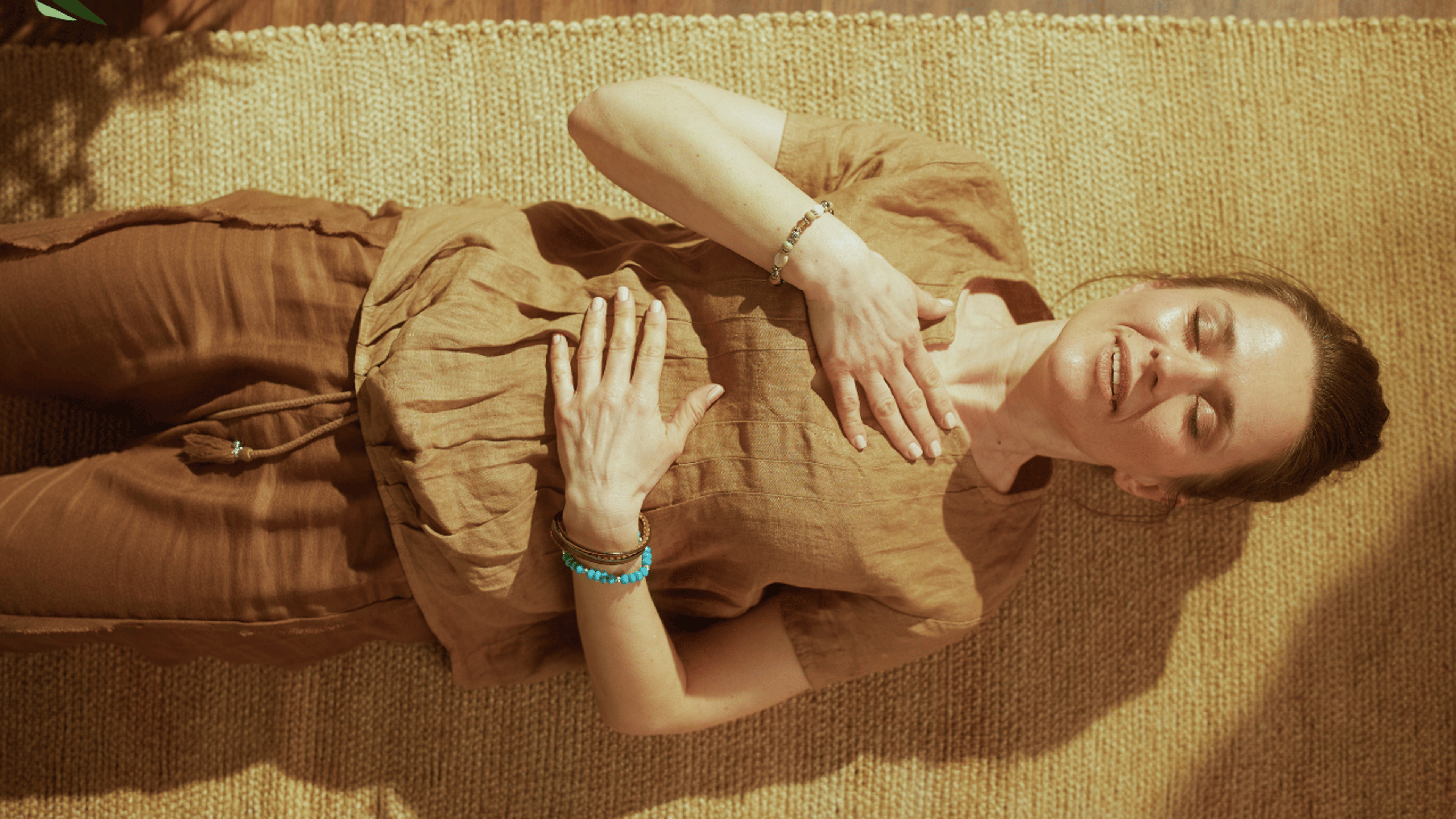
You breathe all day without thinking about it, until stress takes over. Then your breaths get shorter, your shoulders creep up, and your body starts acting like everything is an emergency. Breathwork helps interrupt that cycle.
By following a simple breathing pattern, you give your mind one steady thing to focus on and your body a chance to settle. It’s especially useful when you feel completely overstimulated, with too many people, thoughts, and notifications competing for your attention. It may sound a little woo-woo, but it’s one of the oldest and most accessible ways to manage stress.
What breathwork actually is
Breathwork means noticing or changing how you breathe on purpose. You might slow down, lengthen your exhale, pause between breaths, or simply observe each one.
The practice isn’t new. Pranayama, the yogic practice of working with the breath, has been used for thousands of years. Many modern techniques are simplified versions designed for relaxation.
Slow breathing can help your body settle. Faster, more forceful methods may feel energizing, but can also cause lightheadedness, tingling, or unexpected emotions. Learn those from a qualified instructor, especially if you have a health condition,
If you’re new to breathwork, start gently. You shouldn’t need to push, strain, or rush to feel a big difference.
What breathwork does in your body
Your breath and body are always in conversation. Under pressure, your breathing may speed up before you even realize you’re stressed. Slow it down, especially with a longer exhale, and your body often follows.
Research suggests structured breathing can help ease stress and anxiety, though results depend on the technique. The most helpful practices tend to be guided, repeated regularly, and given a few uninterrupted minutes. You don’t need enormous breaths. Overbreathing can make you dizzy, so aim for a smooth rhythm you can comfortably maintain.
Breathwork creates a real pause, brings you back into your body, and gives you a little room around what you’re feeling.
1. Breath awareness
This is the easiest place to start because there’s no pattern to memorize. You’re just noticing what your breath is already doing.
How to try it:
- Sit or lie somewhere comfortable.
- Let your breathing continue naturally.
- Notice where you feel it most: your nose, chest, ribs, or abdomen.
- When your attention wanders, return to the next breath.
- Continue for one to three minutes.
Use this technique to find your baseline. Is your breathing fast or slow? Smooth or uneven? Are your shoulders creeping toward your ears? You don’t need to change anything yet. Just notice.
2. Diaphragmatic breathing
Diaphragmatic breathing, also called belly breathing, puts your diaphragm back in charge. Despite the name, you don’t need to push out your stomach. Picture your lower ribs expanding in every direction: front, sides, and back.
How to try it:
- Lie on your back with your knees bent, or sit with your feet supported.
- Place one hand on your upper chest and the other near your lower ribs or abdomen.
- Inhale slowly through your nose and feel your lower ribs and abdomen expand.
- Exhale comfortably and let them fall.
- Repeat for three to five minutes without forcing deeper breaths.
Can’t feel your back ribs moving? Try it in child’s pose or on all fours. Sometimes a different position helps the movement click.
3. Box breathing
Box breathing divides each breath into four equal parts: inhale, hold, exhale, hold. The predictable rhythm gives a busy mind one thing to follow.
How to try it:
- Exhale normally.
- Inhale through your nose for four counts.
- Hold for four.
- Exhale for four.
- Hold for four.
- Repeat for three or four rounds.
Start with four counts. If it feels uncomfortable, try two or three counts, skip the holds, or choose another technique. It should feel steady, not restrictive.
4. Longer-exhale breathing
A longer exhale works well when you’re keyed up and want something simple, with no breath holds required.
How to try it:
- Inhale through your nose for four counts.
- Exhale slowly for six.
- Pause if it feels natural, then begin again.
- Continue for two to five minutes.
Start with the timing that feels best and focus on keeping the exhale slightly longer than the inhale without straining.
5. 4-7-8 breathing
The 4-7-8 technique uses a longer hold and exhale, making it the most challenging practice on this list. Start with only a few rounds.
How to try it:
- Inhale through your nose for four counts.
- Hold for seven.
- Exhale slowly through your mouth for eight.
- Repeat for up to four rounds.
Go at your own pace and work up to more. If the hold feels strained, return to the longer-exhale technique instead.
How to make breathwork a habit
Keep it simple: one technique, two minutes, once a day. Pair it with something already in your routine, like making tea or getting into bed. Over time, you’ll learn which patterns help you relax and which help you focus.
Stop if anything feels wrong and return to your natural breathing. If you’re pregnant or managing a health condition, check with your provider first.
Breathwork can’t solve everything, but it can create space to hear yourself think. If you still feel stuck, talk it through with a Keen advisor.